Clinic Missed-Call Automation Checklist
Clinic missed-call automation should start with a recovery loop: approved reply, booking context, callback task, owner queue, human escalation, and review.
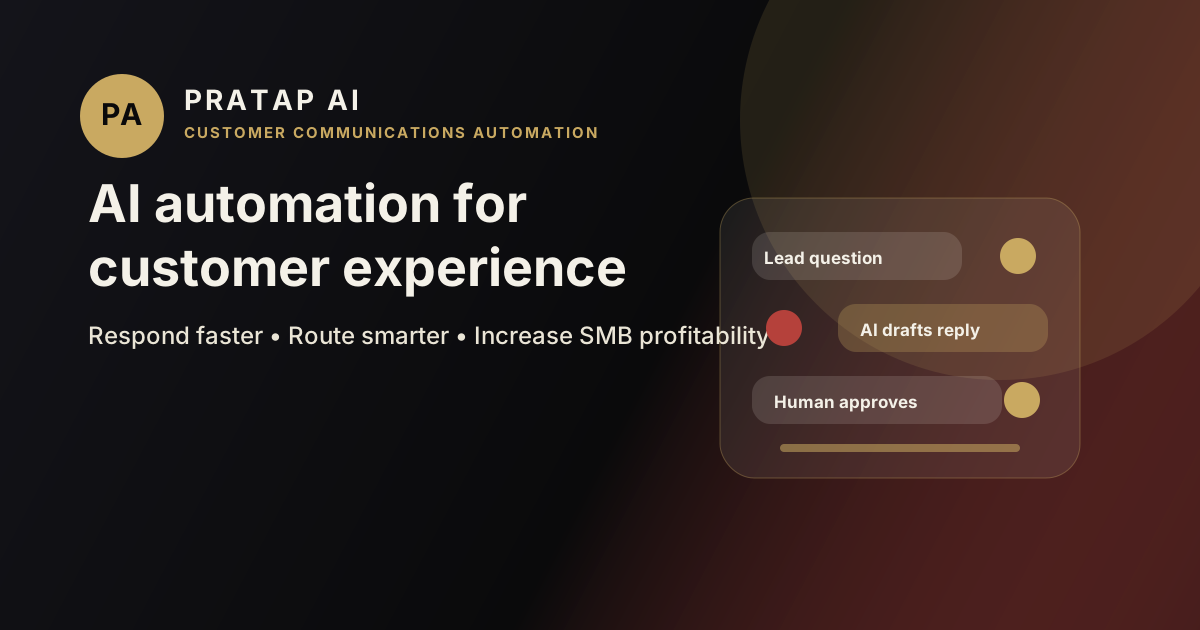
Clinic missed-call automation should start with a recovery workflow, not a fully autonomous receptionist. The system should detect missed calls, send an approved acknowledgement, collect basic booking context, create a callback task, assign an owner, and escalate sensitive or urgent cases to a human.
What is clinic missed-call automation?
Clinic missed-call automation is a workflow for handling patient or customer calls that go unanswered. It connects the missed call to a safe follow-up process: acknowledgement, context capture, owner assignment, task visibility, and human escalation.
This is different from trying to make an AI receptionist handle every conversation. A full receptionist workflow can be useful later, but the safer first step is narrower: make sure a serious caller does not disappear into the phone log.
For clinics, dental practices, wellness centres, salons, hospitality operators, and other phone-heavy businesses, the missed call is only the signal. The real operational gap is what happens next.
Why missed calls become an operations problem
A missed call creates risk because it often sits outside the systems the business actually reviews.
A patient calls while the front desk is busy. A dental lead calls during treatment hours. A hotel guest calls about availability. A customer calls and then sends a WhatsApp message. If the team depends on memory, the business may not know:
- Whether the caller received any acknowledgement
- Why the person called
- Who owns the callback
- Whether the case was urgent or sensitive
- Whether the callback was completed
- Whether the same caller also contacted WhatsApp, a form, or social media
That is why a missed-call workflow should not stop at notification. It should create context, ownership, and visibility.
Step 1: Identify business-critical phone numbers
Start by listing the numbers where missed calls matter.
For a clinic or appointment-led business, this can include:
- Main front-desk number
- Branch or location-specific numbers
- WhatsApp-connected numbers
- Google Business Profile numbers
- Ad campaign numbers
- Doctor, owner, or manager numbers that still receive customer calls
- Reception or booking desk numbers used after hours
For each number, write down who owns it, when it is answered, what happens when it is missed, and where unresolved calls are reviewed.
If no one checks a missed-call list daily, that number is not just a contact point. It is a leakage point.
Step 2: Write the approved missed-call response
The first response should be polite, specific, and low-risk. It should acknowledge the call without pretending to diagnose, triage, quote, refund, or promise availability.
A clinic-safe pattern looks like this:
“Hi, we missed your call. Please share your name, preferred callback time, and whether this is about a new appointment, existing appointment, or general query. Our team will review and get back to you.”
For a dental practice, it might ask for appointment type or preferred branch. For a wellness centre, it might ask whether the caller is asking about a booking, service, or existing appointment. For hospitality, it might ask for date, number of guests, and preferred callback time.
The key is restraint. The message should open the loop and collect routing context. It should not make sensitive decisions.
Step 3: Capture only safe booking context
Good automation asks only for information that helps a human call back faster.
Useful fields can include:
- Name
- Callback number if different from caller ID
- Preferred callback time
- New or existing customer
- Appointment, booking, support, or general query
- Branch or location
- Short reason for the call
- Existing appointment or order reference where relevant
Avoid asking for unnecessary personal detail. In clinics, avoid asking automation to interpret symptoms, urgency, treatment needs, or medical advice. If the caller suggests urgency or uncertainty, the workflow should escalate to a human.
A practical rule: collect enough to route the callback, not enough to replace the callback.
Step 4: Create the callback task and owner queue
The most important part of the workflow is task creation.
An acknowledgement message helps the customer. A callback task helps the business actually close the loop.
A useful callback task should show:
- Caller number
- Time of missed call
- Source number or channel
- Customer reply or booking context
- Category of inquiry
- Assigned owner or queue
- Due time
- Status
- Escalation flag if needed
- Notes from the final callback
This can live in a CRM, spreadsheet, appointment system, helpdesk, task board, or custom dashboard. The tool is less important than the operating rule: every serious missed call should have an owner and a visible status.
Step 5: Escalate urgent, unclear, or sensitive cases
Clinic missed-call automation should be designed around clear boundaries.
Automation can acknowledge, collect basic context, create a task, and route an owner. It should not decide medical urgency, provide diagnosis, handle complaints emotionally, negotiate sensitive pricing, or make promises the team cannot verify.
Escalate immediately when the caller mentions:
- Urgency, pain, medical concern, or safety risk
- Complaint, anger, refund, or legal concern
- Pricing exception or payment dispute
- VIP or high-value customer context
- Confusing or incomplete information
- Any phrase the system is not confident classifying
Human escalation is not a weakness. It is what makes the automation safe enough to use.
Step 6: Review unresolved missed calls
A missed-call system should give the owner a simple review habit.
Daily or weekly, review:
- How many calls were missed
- How many received acknowledgement
- How many replied with context
- How many callback tasks were created
- How many were completed
- Which numbers, locations, days, or hours create the most missed calls
- Which inquiry types need better scripts, staffing, or routing
- Which cases required human escalation
This turns call handling from guesswork into an operating loop. The founder or practice manager can see where calls are being recovered and where the system needs adjustment.
AI receptionist vs missed-call recovery workflow
An AI receptionist tries to handle more of the conversation. A missed-call recovery workflow does something narrower and safer.
| Area | Missed-call recovery workflow | Full AI receptionist |
|---|---|---|
| First goal | Recover unanswered calls | Handle live conversations |
| Risk level | Lower | Higher |
| Best first use | Acknowledgement, context, callback tasks | Routine questions, booking flows, structured intake |
| Human role | Own callbacks and sensitive cases | Approve boundaries, review exceptions, handle escalations |
| Good starting point? | Yes, for most phone-heavy businesses | Only after the operating loop is clear |
For many clinics and local businesses, the missed-call loop should come first. Once the team trusts the acknowledgement, routing, and review process, more advanced AI receptionist features can be added carefully.
Examples by industry
Dental clinic appointment request
A patient calls during treatment hours. The system detects the missed call, sends an approved WhatsApp message, asks for name, preferred callback time, and whether this is a new appointment or existing appointment. A callback task is assigned to the front desk. If the reply suggests urgency or pain, the task is escalated to a human immediately.
Hotel booking inquiry
A guest calls about availability. The system acknowledges the missed call and asks for date, number of guests, and preferred callback time. The booking desk receives a task with context and a due time. If the message includes complaint or payment concerns, the case goes to a manager.
Real estate site-visit inquiry
A buyer calls about a property. The system asks for property/location, budget range, timeline, and site-visit interest. A salesperson receives the task. Negotiation and relationship handling stay human-owned.
D2C support or order-status call
A customer calls about delivery, COD, product questions, or returns. The system asks for order number and issue type, creates a support task, and escalates refund or angry-customer cases to a human.
FAQ
What is clinic missed-call automation?
Clinic missed-call automation is a follow-up workflow for unanswered calls. It detects the missed call, sends an approved response, captures booking context, creates a callback task, assigns an owner, and escalates sensitive cases.
Is missed-call automation the same as an AI receptionist?
No. Missed-call automation is narrower. It focuses on recovering unanswered calls and creating owned follow-up. An AI receptionist handles more of the live conversation and needs stronger boundaries.
Should clinics use WhatsApp or SMS for missed-call follow-up?
Use the channel your customers already respond to. In many Indian service businesses, WhatsApp is practical. SMS, email, or callback-only workflows may be better in other contexts.
What should a clinic missed-call auto-reply say?
It should acknowledge the missed call and ask for safe routing context such as name, preferred callback time, appointment type, and location. It should avoid diagnosis, urgency assessment, treatment advice, or promises the team has not verified.
What should never be automated in clinic call handling?
Medical judgment, urgent triage, diagnosis, complaints, refunds, pricing exceptions, VIP handling, and unclear cases should move to a human.
How do you measure whether missed-call follow-up is working?
Track missed calls, acknowledgements sent, replies received, callback tasks created, callbacks completed, unresolved tasks, and escalation rates. The goal is visibility and reliable follow-up, not just faster messages.
Practical takeaway
Start with one business-critical number, one approved reply, one owner queue, one escalation rule, and one daily review habit. When that loop is reliable, the business can safely decide whether it needs a broader AI receptionist workflow.