
Gemma 4 Gets Faster: Why Multi-Token Prediction Matters for AI Builders
Google released Multi-Token Prediction drafters for Gemma 4, promising up to 3x faster inference without quality loss. Here is what it means for developers, founders, and AI product teams.

Google’s latest Gemma 4 update is not just another model release. It is a practical inference-speed upgrade that could make local, edge, and agentic AI applications feel much more responsive.
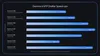
Google has released Multi-Token Prediction (MTP) drafters for the Gemma 4 family, claiming speedups of up to 3x during inference while preserving output quality. For developers, this matters because the bottleneck in modern AI products is often no longer only “how smart is the model?” It is also “how quickly can the model respond?”
That difference is not cosmetic. Faster inference changes the user experience of chatbots, coding assistants, mobile AI apps, voice interfaces, and multi-step agents. A model that feels slow gets abandoned. A model that responds quickly feels useful.
The core idea: draft first, verify once
Traditional large language models generate text one token at a time. Each next word or subword requires another pass through the model. This is reliable, but inefficient. The model spends meaningful time on both easy continuations and complex reasoning steps, even though not every token requires the same level of effort.
Multi-token prediction changes the flow. A smaller drafter model predicts several likely future tokens. The larger Gemma 4 model then checks those proposed tokens in parallel. If the main model agrees, multiple tokens are accepted in a single step instead of being generated one by one.
In simple terms: the drafter creates a fast rough cut, and the main model approves or rejects it.
Why this is important for real products
Inference speed is one of the most practical constraints in AI deployment. Latency affects everything: user satisfaction, infrastructure cost, battery life, and whether agentic workflows can complete tasks without feeling stuck.
Google’s MTP drafters are especially relevant for four categories of builders:
- AI coding tools: Faster token generation makes autocomplete, refactoring, and agentic coding loops feel more interactive.
- Autonomous agents: Multi-step planning requires many model calls. Lower latency compounds across each step.
- On-device AI: Edge models need to balance speed, battery, and memory limits. MTP can improve responsiveness without changing the main model’s reasoning behavior.
- Voice and chat interfaces: Conversational products need low wait times. Users notice pauses immediately.
The technical bottleneck: memory bandwidth
The key issue Google highlights is that LLM inference is often memory-bandwidth bound. The processor spends a large share of time moving model parameters from memory to compute units just to produce the next token. That leaves compute underused, especially on consumer hardware.
Speculative decoding uses that spare compute more intelligently. The drafter model predicts possible future tokens quickly, while the target model performs the final verification. Because the larger model still decides what is accepted, the approach can improve speed without sacrificing answer quality.
What Google improved under the hood
According to Google, Gemma 4’s MTP drafters include several optimizations designed to reduce duplicated work:
- Activation reuse: The drafter can use signals already produced by the target model.
- Shared KV cache: The system avoids recalculating context the main model has already processed.
- Efficient embedding techniques: For smaller edge-focused models, Google added optimizations where final logit computation can become a bottleneck.
- Hardware-aware tuning: Google notes different gains across Apple Silicon, Nvidia A100, consumer GPUs, and batch sizes.
One practical detail stands out: performance gains depend on workload and hardware. For example, batch size can make a major difference. Google mentions that some local workloads unlock better speedups when processing multiple requests together rather than only batch size one.
Why “same quality, faster output” is a strong promise
The most attractive part of speculative decoding is that the main model remains the authority. The smaller drafter does not replace Gemma 4’s reasoning. It only proposes likely continuations. If the target model disagrees, the draft is rejected.
That makes MTP different from simply switching to a smaller model. With a smaller model, speed often comes at the cost of accuracy or reasoning depth. With MTP, the goal is to keep the larger model’s quality while reducing the time required to produce accepted tokens.
Business takeaway: faster models expand where AI can be used
For founders and product teams, this update points to a broader trend: AI performance improvements are moving from raw model capability to deployment efficiency. The winners will not only use smarter models. They will use models that are fast enough, cheap enough, and reliable enough for real workflows.
That shift matters because many AI products fail at the interaction layer. The model may be capable, but the experience feels slow, expensive, or operationally fragile. Better inference techniques help close that gap.
Who should experiment with Gemma 4 MTP drafters?
- Teams building local-first AI tools for developers or researchers.
- Founders testing AI agents that require rapid multi-step execution.
- Mobile teams exploring on-device intelligence.
- Infrastructure teams trying to reduce serving latency without lowering model quality.
- Anyone comparing open models for production-grade inference.
How to get started
Google says the MTP drafters are available under the same Apache 2.0 license as Gemma 4. Developers can access the weights through Hugging Face and Kaggle, and experiment through runtimes including Transformers, MLX, vLLM, SGLang, Ollama, and Google AI Edge Gallery.
If you are already testing Gemma 4, the practical next step is straightforward: benchmark your current workload with and without MTP. Measure tokens per second, first-token latency, total response time, hardware utilization, and output consistency. The headline “up to 3x” is useful, but your actual gain will depend on model size, batch size, runtime, and hardware.
FAQ
What is multi-token prediction?
Multi-token prediction is an inference technique where a smaller drafter predicts multiple future tokens and a larger target model verifies them. If accepted, the system outputs several tokens in the time usually needed for fewer generation steps.
Does MTP reduce model quality?
Google says Gemma 4’s MTP drafters improve speed without degrading output quality because the main Gemma 4 model still verifies the drafted tokens.
Is this useful for local AI?
Yes. Faster inference can make local AI assistants, coding agents, and edge applications more usable, especially when running larger models on consumer hardware.
What should developers benchmark?
Benchmark tokens per second, end-to-end latency, memory use, batch-size sensitivity, and whether outputs remain consistent for your specific workload.
Source: Google Blog, “Accelerating Gemma 4: faster inference with multi-token prediction drafters”.