Zero and the Rise of Agent-Native Developer Tools
Vercel Labs’ Zero points to a bigger shift: programming languages, frameworks, and toolchains are starting to be designed for AI agents, not only human developers.
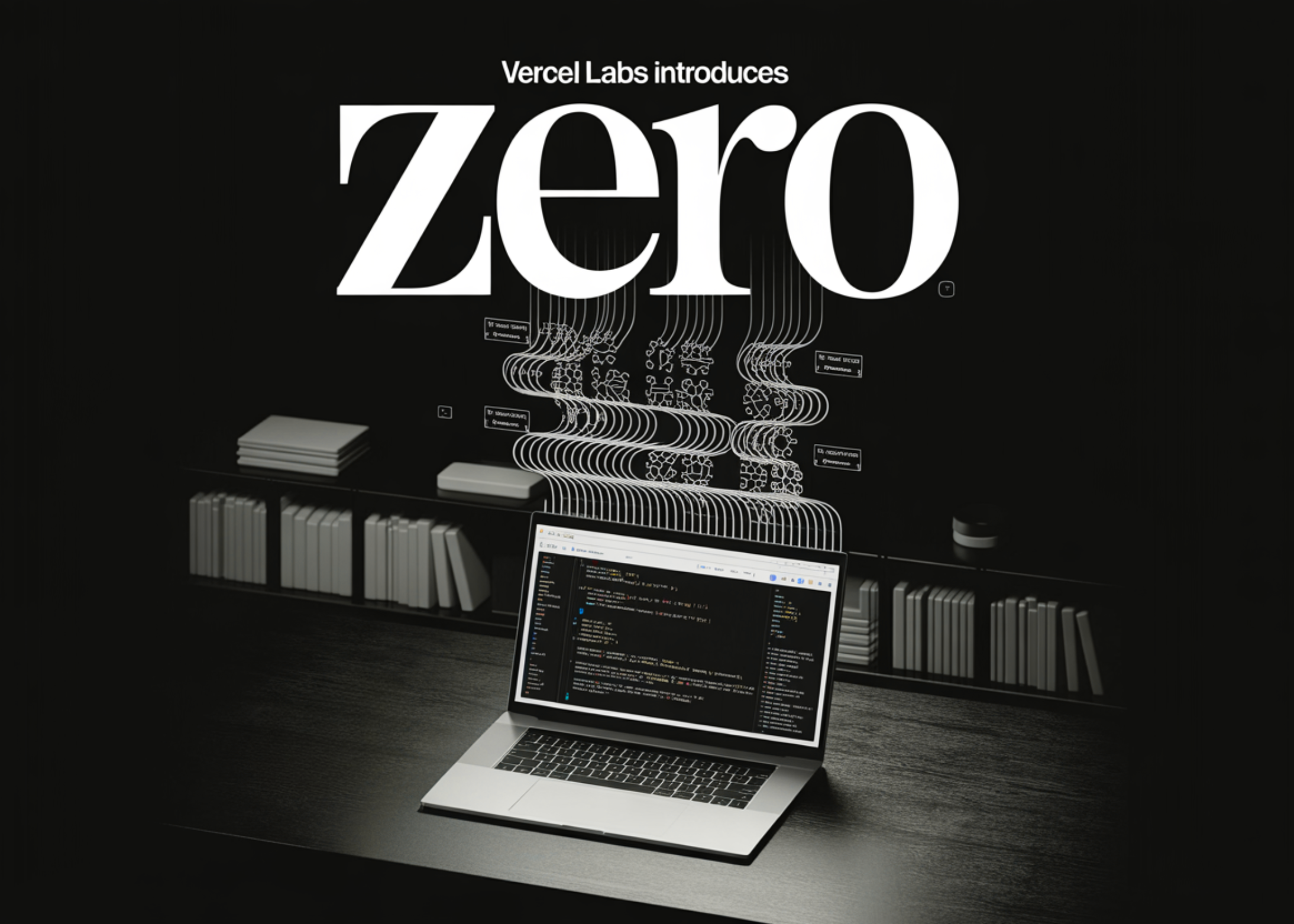
Vercel Labs’ introduction of Zero, an experimental systems programming language, is interesting not only because it adds another language to the systems programming conversation. It is interesting because it reflects a much larger market shift: software tools are beginning to be designed for AI agents as first-class users.
Most programming languages, frameworks, and developer tools were created for human engineers. A compiler prints an error message. A developer reads it, understands the context, searches documentation, edits the code, and tries again. That workflow assumes human judgment at every step.
AI agents work differently. They are much better when the environment gives them structured inputs: stable error codes, machine-readable metadata, explicit constraints, and clear repair paths. Zero appears to be designed around that idea.
What Makes Zero Different
Zero sits in the same broad category as C or Rust: native executables, explicit memory control, and low-level systems use cases. But the more important innovation is in the developer experience for agents.
Instead of treating compiler output as human prose, Zero’s CLI emits structured diagnostics. Errors can include stable diagnostic codes, line numbers, and typed repair identifiers. That means an agent does not need to guess what an error means by parsing text. It can match a known diagnostic, ask the toolchain for an explanation, and generate a structured fix plan.
This matters because today’s agentic coding loop is still fragile. An agent writes code, runs a command, receives logs, tries to infer the problem, and edits the code again. When the logs are noisy or ambiguous, the agent wastes steps. When the error message changes across versions, the agent’s behavior can break. Toolchains that expose structured state reduce that friction.
The Bigger Trend: Tools Built for Agents
I expect more tools and frameworks like this to enter the market as AI agent usage grows. The reason is simple: once agents become active participants in software delivery, the best tools will not be the ones that merely tolerate agents. They will be the ones that help agents operate safely and correctly.
That creates a new design requirement for developer infrastructure:
- Structured diagnostics instead of unstructured logs.
- Stable error codes that agents can reason about across versions.
- Machine-readable repair plans rather than vague suggestions.
- Version-matched documentation exposed directly through the CLI.
- Explicit capabilities so side effects like file, network, and system access are visible.
These are not only convenience features. They are reliability features. They help agents avoid hallucinated fixes, reduce unnecessary retries, and operate inside clearer boundaries.
Why This Matters for Businesses
For businesses adopting AI agents, the important question is not, “Can an agent write code?” That is already happening. The better question is, “Can the agent understand the system well enough to make safe changes repeatedly?”
Agent-native tooling helps answer that question. If a framework can tell an agent exactly what failed, what capability is missing, what repair path is valid, and which documentation applies to the installed version, the development loop becomes more dependable.
This is the same reason structured APIs beat screen scraping. Agents can work with both, but structured interfaces are more durable. The same shift is now coming to compilers, frameworks, CI systems, observability tools, and deployment platforms.
What Founders and Technical Teams Should Watch
Zero is still experimental, so it should not be treated as a production dependency today. But it is a useful signal of where the market is moving.
Teams should watch for three things:
- Agent-readable toolchains: CLIs and SDKs that return JSON, schemas, typed errors, and remediation metadata by default.
- Capability-based execution: systems where agents can only access the resources explicitly granted to them.
- Self-describing frameworks: tools that expose current-version guidance without forcing agents to scrape stale docs.
The long-term opportunity is not only faster coding. It is more reliable software operations. Agents will be more useful when the surrounding tools are designed to communicate with them directly.
Bottom Line
Zero may or may not become widely adopted as a programming language. But the principle behind it is important: the next generation of developer tools will be designed for human engineers and AI agents working together.
As agent usage increases, we should expect a wave of languages, frameworks, CI tools, observability systems, and deployment platforms that expose structured guidance for machines. That is where the market is moving.
For founders and technology leaders, the takeaway is clear: do not only ask whether a tool supports AI agents. Ask whether it was designed to be understood, repaired, and operated by them.
FAQ
What is Zero?
Zero is an experimental systems programming language from Vercel Labs designed around native execution, explicit control, and AI-agent-friendly compiler/toolchain feedback.
Why is Zero relevant to AI agents?
Zero’s toolchain is designed to emit structured diagnostics and repair metadata, making it easier for AI agents to understand errors and propose fixes without parsing human-oriented logs.
Should teams use Zero in production today?
Not yet. Based on current public information, Zero is best treated as an experimental project and a signal of future developer-tool design trends.
What is the larger trend behind Zero?
The broader trend is agent-native software infrastructure: tools, frameworks, and platforms that expose structured, machine-readable state so AI agents can work more reliably.
Recommended reads
What Should You Use AI Agents For? A Practical Founder’s Playbook
The best way to use AI agents is not to start with models or tools. Start with repeated work, low-value admin, research loops, and personal friction points you already understand, then give agents narrow jobs with clear review steps.
Semantic Memory Substrate: Why AI Agents Need Shared Company State
A company brain is not another app that remembers things. It is a shared semantic memory substrate that lets humans and AI agents work from the same facts, decisions, permissions, and history.